XWORLD Has Updated 52 Versions in Alpha Test, For A Stunning Release
XWORLD, the top-tier games, and apps recommendation platform, has recently released 52 versions for alpha testing. These versions have been carefully developed and refined to ensure a stunning release in the near future. XWORLD aims to provide users with a curated selection of the best games and apps available, ensuring an exceptional user experience.
Stay tuned for the exciting release!
X-World Version Update Records (Last 10 updates)
Client 3.1.34
Release time: 2023/10/20
Optimization — Acceleration of $BUILD mining with H5 games participating in
Optimization — Home page UI optimization
New — Flash sale product notices added to homepage and game selection page
Client 3.1.33
Release time: 2023/10/13
Optimization — Some UI details
Optimization — Adjust the digging $BUILD boot style
Added — Pop-up window of new user digs $BUILD prompt
Added — Novice task guide (dig $BUILD guide)
Fix — Handle human detection timeout issue
Optimization — Smartlook screen recording logic
Client 3.1.32
Optimization — Adjust some UI details
Optimization — Added pop-up prompts for blank/error on network alliance task download page
Optimization — Deal with the problem that some mobile phones cannot open permissions
Optimization — The wallet balance increases currency switching, and the wallet hides tokens with a balance of 0 by default
Client 3.1.31
App Store Path Adjustment
Modify the minimum amount for forced wallet creation and backup wallet to 0.2 USD.
Remove new user interest guidance
Remove fresco and reduce package size
Client 3.1.30
Fix the problem of integrating Smarlook
Fixed the problem of incorrect loading of images in the game recommendation list
Client 3.1.29
Added — Game recommendation list supports video playback
Added — First transaction build adds withdrawal guidance
Added — Smartlook (tool for recording user behavior)
Optimization — Add pre-cache for novice pop-up window
Optimization — add external link style to community posts
Optimization — Add security prompt in permission guidance pop-up window
Optimization — When returning to the audit status in the background, the Client adds audit judgment and reports it
Optimization — Change the threshold for creating a wallet to 0.05 USD.
Fix — Deal with the problem that the prop store is not displayed when the application is first opened after installation
Fix — Deal with issue with video sound still playing after exiting video post
Fix — Meizu phone failed to navigate to the application usage permission page set by the system
Optimize other UI experiences and handle other issues
Client 3.1.28
Added the function of sending pop-up windows in the background
Application display status bar/navigation bar
Optimize some UI displays and fix known issues
Client 3.1.27
Add gaid to obtain retry mechanism
Optimized web3 zone revision
Adjust some UI and fix known issues
Client 3.1.26
Added push notification to support icon display function
Added the function of displaying/hiding small red dots in all bottom tabs of the homepage
Added deep chain support to jump internal product/post/event details page
Added the function of selecting interests for new users after registration
Added functions for novice tasks and guidance
Optimize the experience of changing the personal page address URL to the page path (Client multilingual processing)
Optimize the experience of displaying balance for users who have not created a wallet
Optimize the experience of following the author from the post details page and then returning to update the following status
Optimize the experience of displaying high build guides on the library page once a day
Fix the issue of selecting image permissions for android13
Fix the problem that the UUIDs reported by the exposure of community list items are all the same
Fix the problem that clicking tab refresh fails
Fix the problem of anr caused by web3 wallet initialization
Fixed the issue of 403 error (restoring wallet function) when accessing links on some mobile phones
Modify the app icon
Client 3.1.25
Deep Chain supports jumping to fan list
Payment/binding deep chain modification, payment interface parameter modification
Client 3.1.24
Add functions for editing and deleting posts
Add web3 page and the following tabs on the homepage
Add the function of viewing larger images to the community map
Add application to expose and report in the foreground
The unified password for payment function is the wallet password
Post search adds recommended games that can be associated
Optimize the process of posting and selecting images
Add follow/unfollow author function to post details page
Add the function of clicking the post user avatar to jump to the guest status page
Client 3.1.23
Change package name, signature, and configuration again
Audit logic change
Added Client Settings page
Other issues to deal with
XWORLD
New-Gen Games & Apps Monetization Platform
Earn Profits & Assets from Your App Usage Time
Website | Twitter | Instagram | Facebook |Litepaper
The Future of Digital Advertising: From Centralized Monopoly to User Empowerment with XWORLD
What was once one of the best-hidden secrets of the online world is not so secret anymore. The seemingly "free" internet comes at a cost: losing control over how our personal information is used. While we browse, our behavior and personal data are collected, analyzed, and monetized, turning us into the product without our consent.
Shifting the Paradigm of the Attention Economy
User data and their attention are the most valuable commodities in the digital age. Unfortunately, that sets the stage for an unfair fight, as traditional digital advertising models are often skewed in favor of large corporations. Internet giants like Google and Facebook dominate the digital ad space, generating billions of dollars by monetizing user information. To illustrate, Meta's ad revenue in Q1 2024 was $35.6 billion, while Google raked in $80.5 billion during the same period. This success relies on turning user behavior-searches, social interactions, and location data-into profitable insights for advertisers. However, as legacy platforms compete fiercely for user attention through tactics like infinite scrolling, personalized recommendations, and push notifications, users are often left with no control over how their data is used.
While ordinary users feel helpless in this monopolized environment, the recent Web3 revolution may bring us new possibilities. Let's take a closer look at how Web3 technology could change the digital advertising space.
Web3 and Decentralization: A New Digital Ecosystem
Web3 technology brings an opportunity to create a more equitable digital ecosystem. This new concept of digital advertising allows users to maintain control over their data, enabling them to choose how their information is used and to profit from their engagement.
Key features of this new, Web3-powered advertising model include:
Data Ownership: Users retain full ownership of their data and can choose to use it as they see fit.
Tokenized Incentives: Users are rewarded for their attention and participation, turning digital interactions into real-world value.
Fair Revenue Distribution: Both developers and users receive a fair share of ad revenue.
Several emerging platforms are utilizing Web3 concepts to move away from the centralized monopoly and give control back to the users. For instance, an application called XWORLD is attempting to put these ideas into practice. XWORLD is an advertising distribution platform built on Web3 principles, primarily focused on distributing games and apps. It provides game and app recommendations and, more importantly, seeks to distribute a portion of the advertising revenue directly to users. If this model succeeds, it could signal a radical shift in the entire industry. With nearly 5.5 million total users and over 600K daily users, XWORLD is among the leaders of this digital revolution revolution.
The core innovation behind XWORLD lies in the new value distribution. Rather than centralizing ad revenue, XWORLD rewards users for their participation and attention. This system redistributes a portion of the advertising revenue generated from game/app promotions to users, empowering them to monetize their digital interactions. The platform is built on the belief that users should be compensated for the value they bring to the digital space, thus creating a more balanced ad ecosystem. Almost $3 million of shared ad revenue through the XWORLD platform so far certainly proves that this concept can succeed.
However, bringing the new decentralized version of the Internet to people is not without challenges:
User Education: As many users are new to these concepts, it's essential to provide them with educational resources to ensure they understand how to take advantage of these platforms.
Technological Maturity: With blockchain technology still developing, Web3-based platforms need to be built to scale with the growing demand for decentralized applications.
Regulatory Landscape: Governments are yet to adapt to Web3 technologies, so there's work to be done to create legal frameworks that will foster a sustainable, decentralized advertising ecosystem.
A Transparent and Fair Future
By decentralizing value distribution and fairly rewarding all the participants, a dynamic Web3-based ecosystem will bring a new standard for fairness, transparency, and efficiency to the attention economy. Users no longer have to accept being exploited for their attention. Instead, they can actively participate and benefit from the value they bring to the table.
Website | Twitter | Facebook | Telegram | Discord
Unlock AD 3.0 – Profit from your influence, time, and online activities!
Who Owns the Machine? Reflections on Neo, AI, and the Meaning of Autonomy
At the end of October 2025, 1X Technologies' humanoid robot Neo swept through the tech world like a heatwave. This sleek robot, backed by OpenAI, is touted as the first truly home-friendly physical assistant.
Priced at around $20,000 or $499 per month for leasing, Neo can clean, carry items, and even learn new tasks through imitation. In just a few days, it became the internet's focal point — seemingly, a tireless family companion has finally arrived.
Yet, behind the cheers, a profound reflection on "autonomy" quietly unfolds. Remote control offers the illusion of convenience, but it exposes a core pain point in the AI industry: human operators still lurk in the shadows, and what happens to your privacy data?
As Curious CEO David Tomasian puts it:
"True autonomy is the only way machines can belong to us."
An Illusion: The Myth of Humanoid Robot "Autonomy"
Neo's launch is indeed exhilarating: standing 5 feet 6 inches tall and weighing 66 pounds, it uses tendon-driven actuators mimicking human muscles, wrapped in a soft shell for safety. Hugging Face co-founder Thomas Wolf exclaimed on X that Neo has "advanced" his timeline for home robot adoption.
In demos, Neo waters plants, opens doors, washes clothes, and scrubs dishes, turning mundane chores into something poetic and efficient.
But this excitement was quickly doused by reality. The Wall Street Journal's hands-on report reveals that many of Neo's movements are still remotely controlled in real time by "experts" via VR.
This isn't sci-fi — it's the current state of AI, where remote piloting aids companies in training models through imitation and reinforcement learning, yet reduces the robot from "independent helper" to "human extension."
Tomasian sharply notes that under this model, your "private robot" isn't truly private: it not only observes your life but uploads data to the cloud, fueling the manufacturer's training.
When a robot can "see" your home layout, recognize your voice, and analyze your habits — yet remains tethered to the manufacturer's servers — who does it really belong to?
From Factory to Home: The Privacy Cost Beneath Autonomy
The wave of humanoid robots is flowing from factories to living rooms. Figure AI's Figure 02 and Tesla's Optimus aim to reshape industry, while Neo pushes the vision into consumer territory — not just productivity, but companionship itself.
This trend is especially urgent in elderly care. Pilot projects in Japan, Korea, and parts of Europe are testing robots for assisting daily activities, monitoring health, and providing emotional support. But Tomasian points out: "The difference between aid and true care lies in understanding context and emotion." If data isn't encrypted and stored locally, "the robot isn't yours—it's someone else's lens."
Privacy expert Kohei Kurihara disclosed on X that Neo users must sign a waiver allowing manufacturers access to certain operational data. This "tech-for-convenience" pact hides cracks in trust. A Medium article bluntly states that this $20,000 robot "needs a human babysitter", with complex tasks requiring an appointment for "expert mode," making users feel like they're renting a "surveilled puppet."
Tomasian emphasizes that for embodied intelligence to evolve like language models, three things are essential: on-device reasoning, multimodal understanding, and encrypted autonomy. AI must not just execute commands but comprehend "why" they are given, ensuring data sovereignty belongs to the user. True care reliability stems from security and privacy, not algorithmic complexity. In other words, autonomy isn't just a technical issue — it's a social contract: Machines should embody trust, not extend surveillance.
From Embodied to Digital: AI Agents' Lessons on Autonomy
Neo's controversy reflects a deeper trend: "Autonomy" isn't confined to mechanical limbs — it's also about digital intelligence. Rather than teaching robots in your living room how to wash dishes, why not have agents on the network learn to "act on your behalf"?
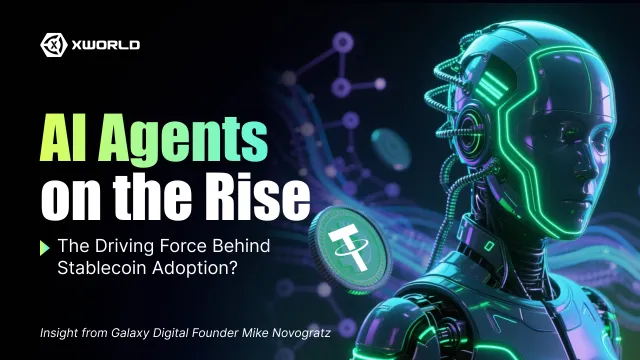
AI Agents are the extension of this direction. They're not humanoid replicas but digital extensions of human will — capable of executing tasks, making decisions, and completing transactions on behalf of users, with data ownership retained by the individual.
IBM's "2025 AI Agent Report" states that Agentic AI promises an 8x productivity boost, hinging on autonomous reasoning combined with privacy protection.
Google Cloud research shows 52% of enterprises using generative AI have deployed AI Agents.
Deloitte predicts half of companies will enable Agentic AI by 2027.
Gartner forecasts that within four years, agents will autonomously handle 15% of daily decisions.
This shift redefines "autonomy": no longer machines mimicking human limbs, but agents learning to represent human intent.
XWorld: A Real-World Experiment in "Machines Belonging to People"
Amid this trend, the XWorld platform's explorations stand out. Since its 2023 launch, it has built a self-sustaining "agent economy" by combining AI training with token incentives: users can create, deploy, and monetize their own AI Agents. The integration of stablecoins makes settlements lower-friction, ensuring value flows under user control.
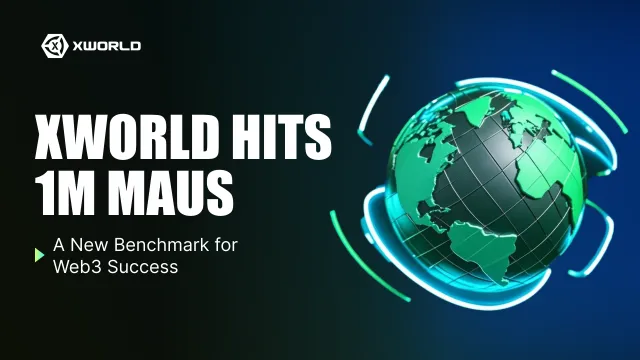
Today, XWorld boasts over 11 million downloads and 1 million monthly actives in its Telegram MiniApp ecosystem, with cumulative token trading volume exceeding $34.7 million.
Here, autonomy is no illusion — it's a reality co-built by users, developers, and agents: machines not only execute instructions but become "intelligence we own."
Epilogue: Who Truly Owns the Machines?
Neo reminds us: when "autonomy" becomes a selling point, oversight and trust must evolve in tandem.
The future shown by the AI Agent industry offers another possibility:
Machines are no longer just used, but truly "owned";
They no longer serve the network, but human will and data sovereignty.
XWorld's experiment may provide the answer: when "agent autonomy" merges with "user ownership," machines finally begin to belong to us.
In the future, when robots no longer need human eyes, that may be humanity's true liberation.
🔗 Learn more and join XWorld
Website | Whitepaper | Twitter | Telegram | Youtube | Linktree