Bitcoin is skyrocketing, XWORLD is bringing you into this wave of wealth | Complete Web3 Guide for Newbies
Web3, simply put, is the next generation of the internet. It’s a departure from the way we’re used to experiencing the online world. Unlike the traditional model, where central authorities like tech giants or governments have a strong grip on how things work, Web3 is all about decentralization. This means power is spread out across a network of users, making decisions more transparent and resistant to control.
Think of it as a shift from a top-down structure to a community-driven one. In the world of Web3, users have more say, ownership, and control over their online interactions. It’s like a digital democracy where everyone has a voice.
XWORLD, a Pioneering Web3 Games & Apps Store, was borned based on Web3 concept.
In the traditional Web2 world, people get almost no income from downloading games in the Apple App Store and posting content on Facebook, because almost 100% of the marketing expenses of games and applications go to platforms such as Apple and Facebook.
However, game application users are what innovative applications should really strive for, and they are also the people to whom marketing expenses should really be given.
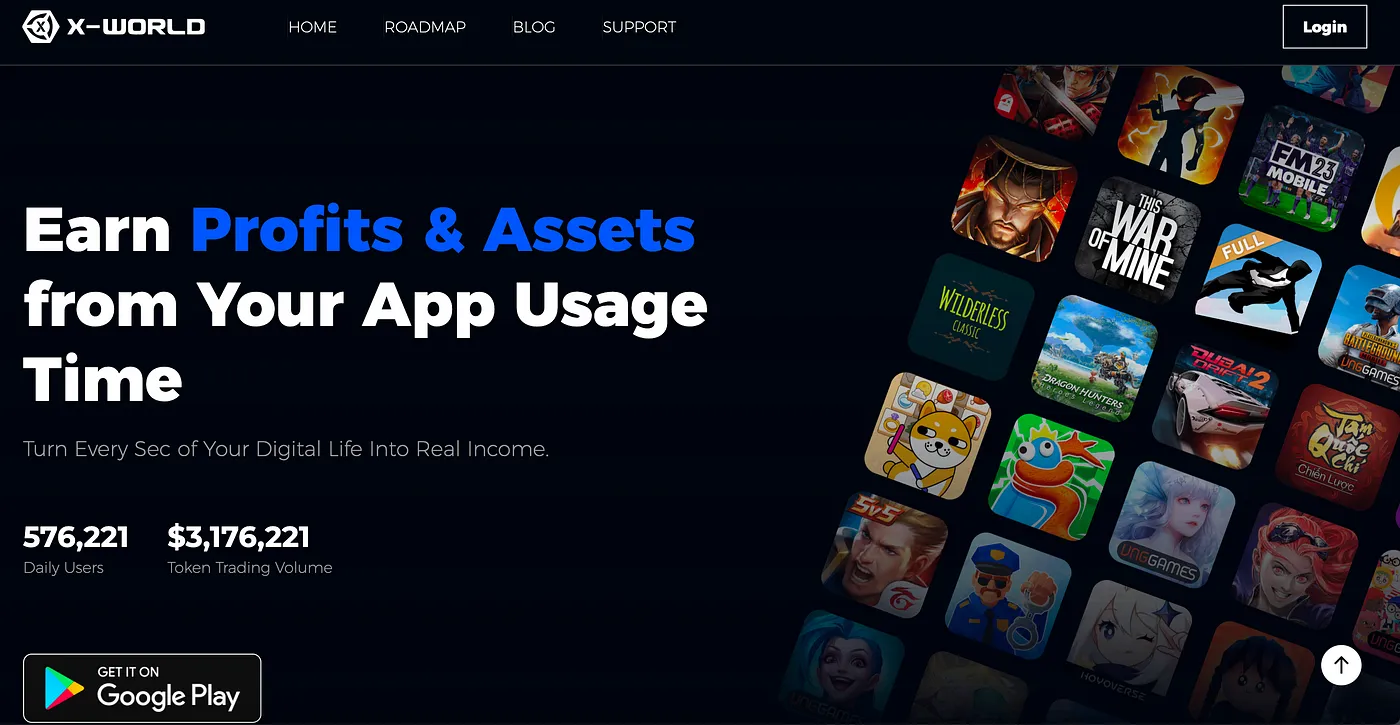
Based on this concept, XWORLD is the world’s first games & applications store that distributes most of the Internet advertising revenue to users.
XWORLD is created for bringing billions of ordinary people in the world into Web3 wave of wealth. This guide is your gateway to understanding this exciting new digital landscape. We’ll break down the core principles of Web3, demystify complex terms like blockchain and dApps, and show you how these concepts are being used in real-world applications.
By the time you’re done, you’ll have a solid grasp of what Web3 is all about and (hopefully) get you acclimated to the new era of the internet.
Demystifying Web3
Web3 Defined: Often categorized as the decentralized internet, Web3 represents a departure from the centralized platforms (Web2) that currently dominate the digital space. Centralized entities like Google, Facebook, and Amazon have significant control over your data and autonomy in Web2. In contrast, Web3 seeks to decentralize and democratize that control, empowering individual users.
Blockchain & Its Significance: The blockchain is the backbone of Web3. It’s essentially a digital ledger where data is stored in ‘blocks’ and is chronologically ‘chained’ together. Every entry is transparent and immutable, which means it’s tamper-proof. The decentralized nature ensures data integrity without relying on a central authority.
Tips: As you embark on your Web3 exploration, focus on mastering the foundational concepts. Familiarize yourself with the history of Bitcoin and blockchain, its different types (e.g., public, private, consortium), and its real-world applications.
Setting Up Your Digital Wallet
The Role of Digital Wallets: Consider your digital wallet as your Web3 passport. It’s where you store digital assets like cryptocurrency, interact with dApps (decentralized applications), and authenticate transactions. Unlike traditional bank accounts, you have full custody of your funds, signifying both power and responsibility.
Wallet Varieties: From browser extensions and mobile apps to physical hardware devices, wallets come in various formats. Each has its advantages and is tailored for specific use cases.
Tips: Your wallet’s security is paramount. Whether you’re opting for MetaMask (a popular browser extension) or a hardware wallet like Ledger, always ensure you’re obtaining it from a legitimate source. Store your seed phrase (a recovery tool) securely, preferably offline, and guard it as you would your most prized possession.
Interacting with dApps, Centralized and Decentralized Exchanges, and Web3 Gaming Platforms
What is a dApp?
A dApp, or decentralized application, is a software application that runs on a blockchain network. This means that dApps are not controlled by any single entity, but rather by the network of users who participate in it. This makes dApps more transparent and resistant to censorship than traditional applications, which are typically hosted on centralized servers.
dApps and Apps on XWORLD
How do dApps work?
DApps are built on top of blockchain technology, which is a distributed ledger that records transactions in a secure and transparent way. When a user interacts with a dApp, their actions are recorded on the blockchain. This means that all transactions are visible to everyone on the network, which makes it difficult to fraud or censorship.
What are some popular types of dApps?
There are many different types of dApps, but some of the most popular ones include:
Decentralized finance (DeFi) platforms: DeFi platforms allow users to lend, borrow, and trade cryptocurrencies without the need for a traditional financial institution.
Non-fungible token (NFT) marketplaces: NFT marketplaces allow users to buy and sell NFTs, which are unique digital assets that can represent anything from art to collectibles.
Gaming dApps: Gaming dApps are blockchain-based games that allow users to earn rewards for playing.
Why are dApps important?
DApps have the potential to revolutionize the way we interact with the internet. By removing the need for centralized control, dApps can make the internet more transparent, secure, and accessible to everyone.
Like any new technology, there are some risks associated with dApps. For example, dApps are still in their early stages of development, so there is a risk of bugs and security vulnerabilities. Additionally, dApps can be complex and difficult to use, which can make them inaccessible to some users.
Despite these risks, dApps have the potential to be a major force in the future of the internet. As the technology continues to develop, we can expect to see more and more dApps being created and used.
Exchanges and Token Trading in the Web3 Ecosystem
Digital asset exchanges play a pivotal role in the cryptocurrency and Web3 landscape. These platforms enable users to trade or “swap” their digital assets, either for other tokens or fiat currency. Broadly speaking, exchanges fall under two categories: centralized (CEX) and decentralized (DEX). Each has its unique set of advantages and disadvantages, primarily revolving around custody, user interface, and functionality.
Centralized Exchanges (CEX):
Examples: Binance, Coinbase, Kraken
Custody: Centralized exchanges act as custodians. When you deposit your digital assets into a CEX, you transfer ownership to the exchange’s wallet. While you hold an IOU or a representation of your assets in your account, the actual assets are in the exchange’s custody. This means you rely on the exchange’s security measures to keep your funds safe.
User Interface: CEXs typically offer user-friendly interfaces, making them a popular choice for beginners. These platforms provide a more traditional trading experience, with features like market charts, order books, and advanced trading options.
Functionality: Beyond just trading, many CEXs offer additional services like staking, savings, or even educational resources.
Liquidity: Due to their centralized nature and large user base, CEXs usually have higher liquidity, making large trades more feasible without significant price slippage.
Regulation: Centralized exchanges are more likely to adhere to regulatory guidelines, requiring users to complete Know Your Customer (KYC) procedures, which might deter those seeking privacy.
Decentralized Exchanges (DEX):
Examples: Uniswap, Sushiswap, PancakeSwap
Custody: One of the main advantages of a DEX is the non-custodial nature. You retain ownership of your assets until the trade is executed, using smart contracts. You interact directly from your wallet, without the need to deposit funds on the platform.
User Interface: Historically, DEXs have had less intuitive interfaces compared to CEXs. However, this has been changing rapidly, with many DEXs now offering clean, user-friendly experiences. Still, they might feel more technical to newcomers.
Functionality: DEXs focus primarily on the swapping of assets. Some have added features like liquidity provision, where users can earn fees by supplying tokens to a liquidity pool.
Liquidity: DEXs might have lower liquidity compared to large CEXs, especially for less popular tokens. This can lead to higher slippage. However, liquidity aggregator DEXs are addressing this concern by pooling liquidity from various sources.
Anonymity: DEXs typically do not require KYC, attracting users who prioritize privacy. However, transactions on public blockchains are still transparent and can be traced.
Example of a DEX Interface
Gaming in Web3:
Platforms like Decentraland and Axie Infinity have burst onto the scene, transforming traditional gaming paradigms. Not only do they offer a virtual playground, but they also provide an economic incentive for players. This shift is evident in the different models these platforms embrace:
Play-to-Earn (P2E): This model, as seen in Axie Infinity, allows players to earn digital assets or tokens by participating in the game. These assets can be traded, sold, or used within the game, and often, they have real-world value. It’s a shift from the old model where players spent money on in-app purchases or cosmetics; now, they can potentially earn from their gameplay.
Virtual Real Estate: Platforms like Decentraland allow users to buy, sell, and build upon virtual land. This land has real-world value, and the scarcity of prime locations drives demand. Owners can monetize their virtual real estate by hosting advertisements, creating interactive experiences, or even leasing their land.
Staking and DeFi Integration: Some games integrate decentralized finance (DeFi) mechanisms. Players can stake their in-game assets to earn interest or leverage them in various ways, similar to traditional finance but in a decentralized setting.
Community Governance: Another hallmark of Web3 games is the power they give to their communities. Token holders often have a say in the direction of the game, from gameplay changes to economic models, allowing for a democratic and decentralized decision-making process.
Tips: Always conduct thorough research before interacting with a new dApp, exchange, or gaming platform. Be wary of platforms promising unrealistic returns or those lacking a transparent development team and community feedback.
Additional Tips and Insights
Security: Web3’s freedom comes with increased responsibility. Phishing attempts are rife. Always double-check website URLs, never share your private key or seed phrase, and utilize two-factor authentication when available.
Gas and Transaction Fees: Primarily on the Ethereum network, transactions require a fee called “gas.” This fee can fluctuate based on how busy the network is. Having a grasp of gas fees is essential to avoid excessive payments or insufficient payments, both of which might result in transaction delays.
Understanding Networks: Different blockchain platforms (like Ethereum, Binance Smart Chain, or Solana) have multiple networks. Ensure you’re on the correct network when executing transactions.
Community Engagement: Tapping into Web3 communities can be invaluable. Platforms like Reddit, Discord, or even ‘Crypto’ Twitter have myriad channels dedicated to specific dApps, games, or general Web3 discussions.
Closing Thoughts
Web3 is not merely a technological evolution; it’s a societal and philosophical shift. It promises a more inclusive, transparent, and decentralized digital future. As with any transformative journey, it requires vigilance, continuous learning, and an open yet discerning mind.
As you navigate Web3, prioritize understanding over investment. Take time to learn, experiment with small amounts, and engage with the community. Be sure to subscribe to XWORLD’s Twitter to stay current on the latest industry news and innovations in the world of Web3.
XWORLD
New-Gen Games & Apps Monetization Platform
Website | Twitter | Instagram | Facebook |Litepaper
X-World TestNet Rewards Program——Step by Step
Hey guys!👋
Your favourite buddy is excited to bring you some super good news!😍 XWorld will be hosting a testnet event. Believe me😎, just like you, I’m filled with anticipation for this event!
This competition will bring you abundant rewards and airdrops🍬. We have prepared meticulously for a long time to ensure the progress of this testnet will run smoothly.
Those of you who are behind the screen, are you excited? Get ready to show your skills and compete with your fellow buddies!
Of course, we’re not here to cause trouble, so let’s get straight to the point!
Test Network Reward Rules:
Follow our twitter and participate in Zealy mission for more Zealy XP:
Twitter:https://twitter.com/xworld_pro
Zealy:https://zealy.io/c/xworld/questboard
Every Zealy XP will convert 1:1 to Xworld Points.
Redeem XWORLD Token \ NFT\ other partner tokens based on Points airdrop calculation.
About X-WORLD Points:
XWorld Points is an incentive point for the XWorld test network account. The corresponding points are obtained according to the accumulated contribution and task completion of the user, and the corresponding tokens ($BUILD\$WORLD) will be exchanged after the launch of the XWorld main network according to the number of points. After the main network is launched, and you complete the exchange of all tokens, your XWorld Points will not be deleted, and will be kept on the main network. In the future, we will airdrop NFT and partner tokens to reward our early participating users.
Reminders:
Stay active and participate in our community activities. Spread xworld and invite your friends to join us.
The more Zealy XP you accumulate, the more XWorld Points you will receive.
Register your XWorld account at https://www.xworld.pro and post your submission on Zealy.
After the first round of the community competition, we will notify all participants through community announcements, and your XWorld Points will be directly recorded on your official XWorld website account based on the Zealy XP you have obtained on a 1:1 basis.
Fair play is essential — cheating or hacking attempts are strictly prohibited! We will closely monitor any such attempts, and any individuals involved will face airdrop disqualification and a ban from our community.
X-WORLD
Enjoying Passionate Game Time, Every Sec Becomes Your Income.
Website | Twitter | Instagram | Facebook |Litepaper
DeepSeek R1: AI Revolution or Digital Surveillance Trap?
DeepSeek R1 demonstrates AI’s immense potential - delivering a cost-effective, high-performing model. But with it comes serious concerns: privacy violations, surveillance, censorship, and security risks.
Optimized, But Not Revolutionary
DeepSeek developed a GPT-4-level LLM in just 60 days for $6M - a remarkable feat achieved through architectural optimizations, not brute-force computing. However, it still lacks advanced reasoning, long-term memory, and truly groundbreaking innovation.
Accessibility vs. Privacy Risks
While DeepSeek’s affordability could democratize AI access, it comes at a price:
Data retention – Deleting your account doesn’t erase your data.
Surveillance – Monitors and collects user inputs and outputs.
Chinese law applies – Authorities can access stored data.
Unilateral terms – Policies can change without user consent.
These privacy violations have already led to GDPR-related bans in Europe, proving that centralized AI remains a major risk.
Censorship & Security Concerns
Like many AI models, DeepSeek hallucinates, exhibits bias, and aligns with political constraints that restrict free information flow. Additionally, its jailbreak vulnerabilities make it a security risk for enterprises, with companies like Goldman Sachs requiring strict screenings before adoption.
But this isn’t just about DeepSeek - it’s about who controls AI, data, and digital economies. The real solution? Decentralization.
Beyond AI - True Digital Ownership with XWorld DAO
DeepSeek exposes the dangers of centralized control, where corporations dictate policies, profit from user data, and limit transparency. XWorld DAO flips the model by ensuring that users, creators, and developers share in the value they generate.
True Digital Ownership – Your data, assets, and earnings belong to you
Decentralized Governance – The community makes key decisions through fair, transparent voting mechanisms
Web3 Monetization for All – Whether engaging with ads, games, or content, every action creates value, and that value is returned to users.
With 11.5 million+ users already part of XWorld, this is more than just a platform - it’s a movement. A decentralized ecosystem where users own their data, earn from their engagement, and shape the future of digital interaction - free from hidden terms, corporate control, or centralized interference.
As AI and digital platforms evolve, the choice is clear: stay under centralized control or embrace true user empowerment. XWorld is the future - where YOU have the power.
Join the revolution today! Follow XWorld on Twitter & take control of your digital future!
Website | Twitter | Facebook | Telegram | Discord
Unlock AD 3.0 – Profit from your influence, time, and online activities!