New Feature: Agent Liquidity Mining Is LIVE!
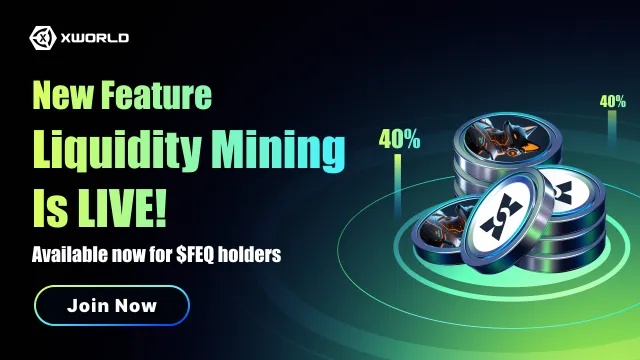
XWorld is excited to unveil Agent Liquidity Mining — a brand-new mechanism to reward long-term holders and strengthen the ecosystem!
🌊 What Is Liquidity Mining?
By pairing your Agent Token with an equal amount of $WORLD, you can add liquidity and enjoy multiple rewards:
🔹 Up to 40% Annualized Yield
Rewards grow with time — the longer you stay in, the higher the APR (up to 40% after 12 months).
🔹 Earn Transaction Fees
Earn a share of trading fees generated from the liquidity pool, based on your contribution ratio.
🔹 Flexible Management
Create, partially withdraw, or fully remove your liquidity at any time. Unclaimed rewards will be automatically collected when you withdraw.
💡 Reward Details
Annualized Yield (APR)
Distributed monthly on the 1st (UTC+0) in off-chain $WORLD.
Yield increases linearly each month, up to a maximum of 40% APR.
Transaction Fees
Can be claimed manually at any time (gas fees apply), or automatically upon full withdrawal.
📌 Who Can Join?
For the best user experience, liquidity mining is only available to AI Agents with a market cap ≥ $1.5M
Trying to join early? You'll see this message:
"To ensure optimal functionality, liquidity mining is only open to AI Agents with a market cap of 2M or higher".
🛠 Feature Highlights
Access the feature directly via your Agent Details Page
Create positions with just a few clicks
View total position value, real-time APR, and unclaimed rewards
Sort and manage multiple liquidity positions with ease
All actions (add/remove/claim) supported with secure on-chain confirmation
🧪 Why This Matters
This is a key step in our mission to:
✅ Encourage long-term holding
✅ Boost liquidity and token stability
✅ Reward our early believers and ecosystem contributors
Agent Liquidity Mining is a smart move to earn rewards while strengthening the ecosystem.
Let your Agent work smarter, join now and make the most of your $WORLD!
🔗 Learn more and join XWorld
Website | Whitepaper | MiniAPP | Twitter | Telegram | Linktree
1 Billion AI Interactions a Day? XWorld Is Turning That Into a Web3 Reality
With over $22M in revenue, 2B+ gameplay records, and an open Agent-driven economy, XWorld is laying the groundwork for the next evolution of decentralized AI.
While many gamers are still grinding for gear or chasing leaderboard ranks, a silent revolution is underway—one where AI plays the game for you, earns on your behalf, and turns interaction into income.
This isn't science fiction. It’s the future being actively built by XWorld, a next-generation platform where anyone can create, train, and monetize intelligent AI Agents in an open Web3 ecosystem. Since its launch in 2023, XWorld has combined AI training engines, behavioral data protocols, and tokenized incentives to form an intelligent, self-sustaining agent economy—already backed by over 10M downloads, 200+ game developer integrations, and a fast-growing user base.
Don’t Grind—Train Your AI to Do It for You
XWorld’s most disruptive feature is turning AI Agents into fully tradable, trainable, and monetizable on-chain assets.
In minutes, users can:
Train Agents to compete in PvP, optimize battle strategies, or farm gold
Deploy them across genres like MOBA, FPS, or RPG games
Earn tokens through automated gameplay, leaderboard climbs, and quest completions
These AI Agents are not bots or cheats—they are legally tradable, modular digital assets. Players can stake NFTs to power their Agents, earn revenue through battle performance, or even sell their behavior models in open markets.
In this paradigm, you become the coach, the manager—and the beneficiary.
From Gameplay to Asset: Data as Capital in the XWorld Economy
At the core of XWorld is GamerDNA, an AI-powered decentralized protocol that transforms every interaction—every match played, strategy learned, or content created—into an on-chain reputation profile.
Win rates, participation depth, content contributions, and economic impact are recorded
These metrics form a dynamic score that unlocks higher-yield tasks, premium Agent staking tiers, and revenue-sharing opportunities
Most importantly, the data remains user-owned and monetizable
In short: your gaming activity is no longer locked in a platform—it’s your asset, and your credit profile.
Multi-Track Monetization: XWorld’s Economic Model Is Already Working
Unlike many token-first projects, XWorld has already proven its commercial model:
Over 2 billion gameplay data records have been accumulated for AI model training
$22M+ in revenue (2024) demonstrates real demand for AI + data + content convergence
Players are rewarded for training Agents, contributing behavioral data, and building on-chain reputations
Meanwhile, core infrastructure modules are already live or under deployment:
Launchpad is in internal beta, allowing users to publish personalized Agent tasks for execution
IAO (Initial Agent Offering) enables fair, tokenized Agent launches tied to locked liquidity pools
$World token economy is being built as the core utility asset for staking, rewards, and compute resources
XWorld isn’t just a concept—it has real users, real revenue, and real distribution—and it’s quickly moving toward a new paradigm: AI Agent as Asset.
Scaling Toward 1 Billion Daily AI Interactions
XWorld’s long-term roadmap outlines a decade-long evolution from a tool platform to a full-blown Agent collaboration ecosystem:
2023: Launched the platform and successfully onboarded early users, reaching over 1 million downloads and 500K+ MAU, while validating user growth and the ad incentive model.
2024: Scaled rapidly on top of early traction—surpassing 10 million total downloads, generating over $22 million in revenue, growing the cross-platform community to 400K+ users, and expanding ecosystem partnerships across gaming, AI, and Web3 verticals.
2025: AI training engine and Launchpad deployment, user-defined Agent templates go live
2026: Launch of $World/$BUILD dual-token system, AI-driven task and ad personalization
2027: Cross-Agent collaboration, SDK/API integration, Creator-to-Earn fund launch
2028–2029: Full no-code Agent creation tools and module marketplace launched
2030–2032: Deep integration of AI, Creator Economy, and GameFi into a unified clearing system
2033–2035: Agent-powered metaverse tooling, 1B+ daily AI interactions, and 500M+ users connected globally
This isn’t a hype project—it’s a decade-long paradigm shift, with real traction and a path to become the intelligent infrastructure layer of Web3.
Platform for Developers, Profits for Players, Infrastructure for the Future
Whether you’re:
A Web2 gamer exploring ways to make money with AI
A creator building reusable gaming content
Or a Web3 developer launching Agent-powered dApps
XWorld provides real tools and real incentives:
Start mining compute power and earn from AI training
Deploy your Agent in competitive games and earn from wins
Publish Agent templates or monetizable plug-ins in the marketplace
Launch new Agent tokens through IAO models
In this world, you don’t just play—you let AI play, earn, and build with you.
The Next Web3 Breakout: From AI Entertainment to AI Economy
AI is changing how content is created. Web3 is changing how value is distributed. XWorld combines both to unlock the AI-native economy of the future.
This isn’t just a platform. It’s a blueprint for how AI will work on your behalf in the open economy.
No coding needed. No elite gamer status required.
Just the will to play, train, and earn—and you’re in.
🔗 Learn more and join XWorld
Website | Whitepaper | MiniAPP | Twitter | Telegram | Linktree
Bitcoin is skyrocketing, XWORLD is bringing you into this wave of wealth | Complete Web3 Guide for Newbies
Web3, simply put, is the next generation of the internet. It’s a departure from the way we’re used to experiencing the online world. Unlike the traditional model, where central authorities like tech giants or governments have a strong grip on how things work, Web3 is all about decentralization. This means power is spread out across a network of users, making decisions more transparent and resistant to control.
Think of it as a shift from a top-down structure to a community-driven one. In the world of Web3, users have more say, ownership, and control over their online interactions. It’s like a digital democracy where everyone has a voice.
XWORLD, a Pioneering Web3 Games & Apps Store, was borned based on Web3 concept.
In the traditional Web2 world, people get almost no income from downloading games in the Apple App Store and posting content on Facebook, because almost 100% of the marketing expenses of games and applications go to platforms such as Apple and Facebook.
However, game application users are what innovative applications should really strive for, and they are also the people to whom marketing expenses should really be given.
Based on this concept, XWORLD is the world’s first games & applications store that distributes most of the Internet advertising revenue to users.
XWORLD is created for bringing billions of ordinary people in the world into Web3 wave of wealth. This guide is your gateway to understanding this exciting new digital landscape. We’ll break down the core principles of Web3, demystify complex terms like blockchain and dApps, and show you how these concepts are being used in real-world applications.
By the time you’re done, you’ll have a solid grasp of what Web3 is all about and (hopefully) get you acclimated to the new era of the internet.
Demystifying Web3
Web3 Defined: Often categorized as the decentralized internet, Web3 represents a departure from the centralized platforms (Web2) that currently dominate the digital space. Centralized entities like Google, Facebook, and Amazon have significant control over your data and autonomy in Web2. In contrast, Web3 seeks to decentralize and democratize that control, empowering individual users.
Blockchain & Its Significance: The blockchain is the backbone of Web3. It’s essentially a digital ledger where data is stored in ‘blocks’ and is chronologically ‘chained’ together. Every entry is transparent and immutable, which means it’s tamper-proof. The decentralized nature ensures data integrity without relying on a central authority.
Tips: As you embark on your Web3 exploration, focus on mastering the foundational concepts. Familiarize yourself with the history of Bitcoin and blockchain, its different types (e.g., public, private, consortium), and its real-world applications.
Setting Up Your Digital Wallet
The Role of Digital Wallets: Consider your digital wallet as your Web3 passport. It’s where you store digital assets like cryptocurrency, interact with dApps (decentralized applications), and authenticate transactions. Unlike traditional bank accounts, you have full custody of your funds, signifying both power and responsibility.
Wallet Varieties: From browser extensions and mobile apps to physical hardware devices, wallets come in various formats. Each has its advantages and is tailored for specific use cases.
Tips: Your wallet’s security is paramount. Whether you’re opting for MetaMask (a popular browser extension) or a hardware wallet like Ledger, always ensure you’re obtaining it from a legitimate source. Store your seed phrase (a recovery tool) securely, preferably offline, and guard it as you would your most prized possession.
Interacting with dApps, Centralized and Decentralized Exchanges, and Web3 Gaming Platforms
What is a dApp?
A dApp, or decentralized application, is a software application that runs on a blockchain network. This means that dApps are not controlled by any single entity, but rather by the network of users who participate in it. This makes dApps more transparent and resistant to censorship than traditional applications, which are typically hosted on centralized servers.
dApps and Apps on XWORLD
How do dApps work?
DApps are built on top of blockchain technology, which is a distributed ledger that records transactions in a secure and transparent way. When a user interacts with a dApp, their actions are recorded on the blockchain. This means that all transactions are visible to everyone on the network, which makes it difficult to fraud or censorship.
What are some popular types of dApps?
There are many different types of dApps, but some of the most popular ones include:
Decentralized finance (DeFi) platforms: DeFi platforms allow users to lend, borrow, and trade cryptocurrencies without the need for a traditional financial institution.
Non-fungible token (NFT) marketplaces: NFT marketplaces allow users to buy and sell NFTs, which are unique digital assets that can represent anything from art to collectibles.
Gaming dApps: Gaming dApps are blockchain-based games that allow users to earn rewards for playing.
Why are dApps important?
DApps have the potential to revolutionize the way we interact with the internet. By removing the need for centralized control, dApps can make the internet more transparent, secure, and accessible to everyone.
Like any new technology, there are some risks associated with dApps. For example, dApps are still in their early stages of development, so there is a risk of bugs and security vulnerabilities. Additionally, dApps can be complex and difficult to use, which can make them inaccessible to some users.
Despite these risks, dApps have the potential to be a major force in the future of the internet. As the technology continues to develop, we can expect to see more and more dApps being created and used.
Exchanges and Token Trading in the Web3 Ecosystem
Digital asset exchanges play a pivotal role in the cryptocurrency and Web3 landscape. These platforms enable users to trade or “swap” their digital assets, either for other tokens or fiat currency. Broadly speaking, exchanges fall under two categories: centralized (CEX) and decentralized (DEX). Each has its unique set of advantages and disadvantages, primarily revolving around custody, user interface, and functionality.
Centralized Exchanges (CEX):
Examples: Binance, Coinbase, Kraken
Custody: Centralized exchanges act as custodians. When you deposit your digital assets into a CEX, you transfer ownership to the exchange’s wallet. While you hold an IOU or a representation of your assets in your account, the actual assets are in the exchange’s custody. This means you rely on the exchange’s security measures to keep your funds safe.
User Interface: CEXs typically offer user-friendly interfaces, making them a popular choice for beginners. These platforms provide a more traditional trading experience, with features like market charts, order books, and advanced trading options.
Functionality: Beyond just trading, many CEXs offer additional services like staking, savings, or even educational resources.
Liquidity: Due to their centralized nature and large user base, CEXs usually have higher liquidity, making large trades more feasible without significant price slippage.
Regulation: Centralized exchanges are more likely to adhere to regulatory guidelines, requiring users to complete Know Your Customer (KYC) procedures, which might deter those seeking privacy.
Decentralized Exchanges (DEX):
Examples: Uniswap, Sushiswap, PancakeSwap
Custody: One of the main advantages of a DEX is the non-custodial nature. You retain ownership of your assets until the trade is executed, using smart contracts. You interact directly from your wallet, without the need to deposit funds on the platform.
User Interface: Historically, DEXs have had less intuitive interfaces compared to CEXs. However, this has been changing rapidly, with many DEXs now offering clean, user-friendly experiences. Still, they might feel more technical to newcomers.
Functionality: DEXs focus primarily on the swapping of assets. Some have added features like liquidity provision, where users can earn fees by supplying tokens to a liquidity pool.
Liquidity: DEXs might have lower liquidity compared to large CEXs, especially for less popular tokens. This can lead to higher slippage. However, liquidity aggregator DEXs are addressing this concern by pooling liquidity from various sources.
Anonymity: DEXs typically do not require KYC, attracting users who prioritize privacy. However, transactions on public blockchains are still transparent and can be traced.
Example of a DEX Interface
Gaming in Web3:
Platforms like Decentraland and Axie Infinity have burst onto the scene, transforming traditional gaming paradigms. Not only do they offer a virtual playground, but they also provide an economic incentive for players. This shift is evident in the different models these platforms embrace:
Play-to-Earn (P2E): This model, as seen in Axie Infinity, allows players to earn digital assets or tokens by participating in the game. These assets can be traded, sold, or used within the game, and often, they have real-world value. It’s a shift from the old model where players spent money on in-app purchases or cosmetics; now, they can potentially earn from their gameplay.
Virtual Real Estate: Platforms like Decentraland allow users to buy, sell, and build upon virtual land. This land has real-world value, and the scarcity of prime locations drives demand. Owners can monetize their virtual real estate by hosting advertisements, creating interactive experiences, or even leasing their land.
Staking and DeFi Integration: Some games integrate decentralized finance (DeFi) mechanisms. Players can stake their in-game assets to earn interest or leverage them in various ways, similar to traditional finance but in a decentralized setting.
Community Governance: Another hallmark of Web3 games is the power they give to their communities. Token holders often have a say in the direction of the game, from gameplay changes to economic models, allowing for a democratic and decentralized decision-making process.
Tips: Always conduct thorough research before interacting with a new dApp, exchange, or gaming platform. Be wary of platforms promising unrealistic returns or those lacking a transparent development team and community feedback.
Additional Tips and Insights
Security: Web3’s freedom comes with increased responsibility. Phishing attempts are rife. Always double-check website URLs, never share your private key or seed phrase, and utilize two-factor authentication when available.
Gas and Transaction Fees: Primarily on the Ethereum network, transactions require a fee called “gas.” This fee can fluctuate based on how busy the network is. Having a grasp of gas fees is essential to avoid excessive payments or insufficient payments, both of which might result in transaction delays.
Understanding Networks: Different blockchain platforms (like Ethereum, Binance Smart Chain, or Solana) have multiple networks. Ensure you’re on the correct network when executing transactions.
Community Engagement: Tapping into Web3 communities can be invaluable. Platforms like Reddit, Discord, or even ‘Crypto’ Twitter have myriad channels dedicated to specific dApps, games, or general Web3 discussions.
Closing Thoughts
Web3 is not merely a technological evolution; it’s a societal and philosophical shift. It promises a more inclusive, transparent, and decentralized digital future. As with any transformative journey, it requires vigilance, continuous learning, and an open yet discerning mind.
As you navigate Web3, prioritize understanding over investment. Take time to learn, experiment with small amounts, and engage with the community. Be sure to subscribe to XWORLD’s Twitter to stay current on the latest industry news and innovations in the world of Web3.
XWORLD
New-Gen Games & Apps Monetization Platform
Website | Twitter | Instagram | Facebook |Litepaper